

What Is Makeup Of The Relationships Of Smaller Groups Of The Environment
Levels of Organization in Environmental
- Stretching from 8 kilometers to a higher place the Earth'southward surface and diving deep equally far as 11 kilometers below the surface of the bounding main contains our biosphere, the region of the planet where life exists.
- Within the biosphere in that location are large geographic regions of similar climates and a feature gear up of organisms adapted to that climate, which are known every bit biomes.
- It is thought that the ocean biome may have been the commencement to be on our planet equally life may have originated here.
- The various biomes of Earth share like characteristics related to the humidity, amount of rainfall, seasonal variability, latitude, and height, which are examples of abiotic factors. Abiotic factors are chemic or physical components of the environs.
- Ecosystems are smaller geographically than biomes. An ecosystem represents both the organisms that alive in a particular area and their concrete surround composed of abiotic factors. Groups of like ecosystems make up individual biomes.
- Some examples of ecosystems in the Pacific Bounding main are kelp forests, the intertidal zone, coral reefs and hydrothermal vents.
- The different species that live together in an ecosystem are called a community.
- Organisms can collaborate in a number of different ways in ecosystems, called interspecific interactions. These include predation (consumption of one species by some other), contest (for resources such every bit nutrient and living space), commensalism (an interaction in which one species benefits and the other is not harmed), mutualism (an interaction in which both species benefit), and parasitism (on species benefits at the expense of another). Symbiotic relationships are those which occur betwixt species living in close clan with i another, and include commensalism, mutualism, and parasitism.
Some examples of these relationships include:
- Predation: consumption of a seal past a shark.
- Contest: seaweeds competing for calorie-free in a kelp forest.
- Commensalism: barnacles growing on the pare of a whale. Barnacles do good past constantly being provided a new food source by the swimming whale. The whale is unaffected by the barnacles.
- Mutualism: cleaner fish are small fish that remove dead skin and parasites from the surface of other fish. Both fish benefit from this interaction.
- Parasitism: salmon lice are small organisms that attach to the skin of salmon and consume their skin, mucous, and blood. High levels of salmon lice infestation can lead to the decease of a salmon.
- Inside a community, a group of organisms of the aforementioned species is chosen a population. These individuals of the same species volition likewise touch each other during intraspecific interactions every bit they compete for similar resources.
- A species is a group of similar organisms that can breed and produce fertile offspring. Below are some examples for the different levels of organization within the report of ecology.
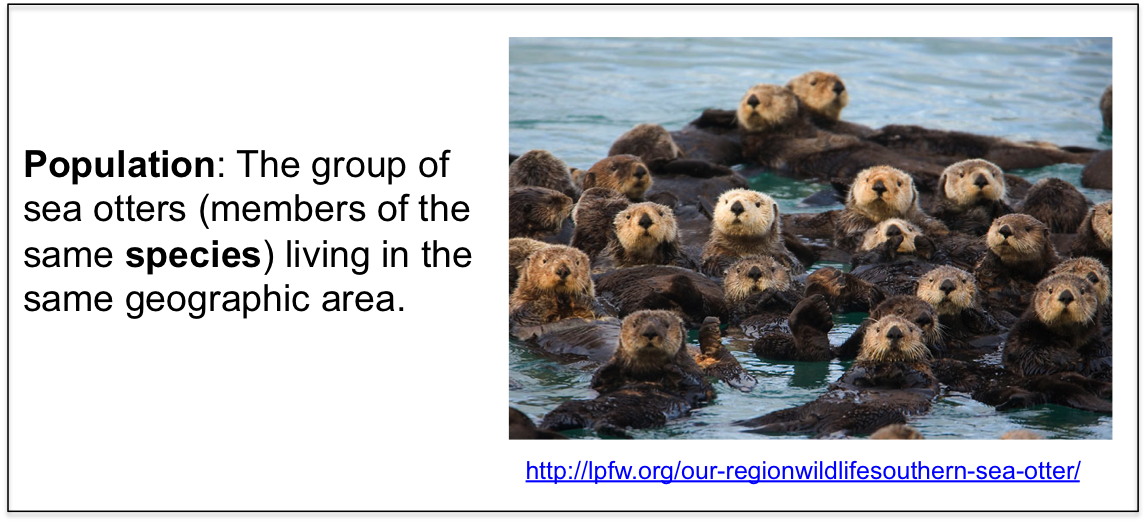
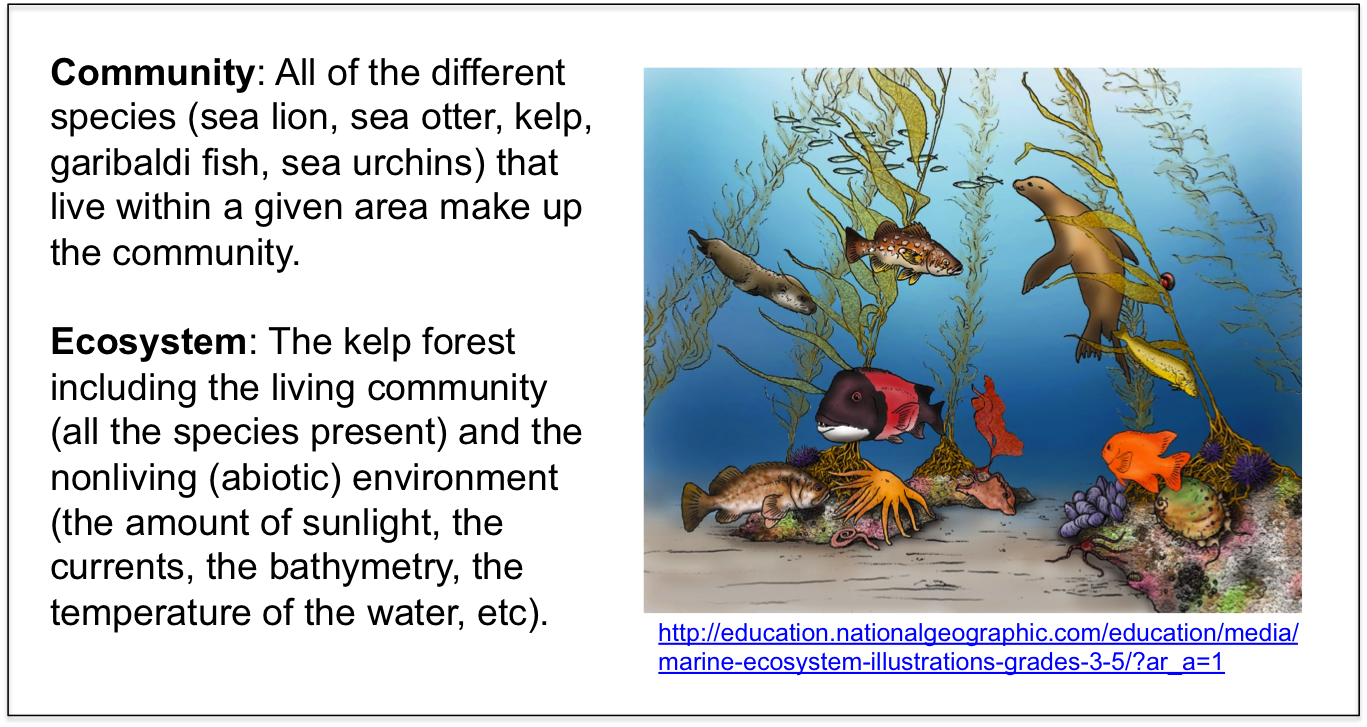
- Inside an ecosystem, all organisms (including everything from tiny microorganisms to the largest of animals) function together achieving a delicate balance. An ecosystem won't survive without acceptable access to resources such as food and living infinite. Within in an ecosystem, each organism has a unique niche, or role to play.
Back to Top
Source: https://oceantracks.org/library/general-ecology/levels-of-organization-in-ecology
Posted by: whitakertecame.blogspot.com
0 Response to "What Is Makeup Of The Relationships Of Smaller Groups Of The Environment"
Post a Comment